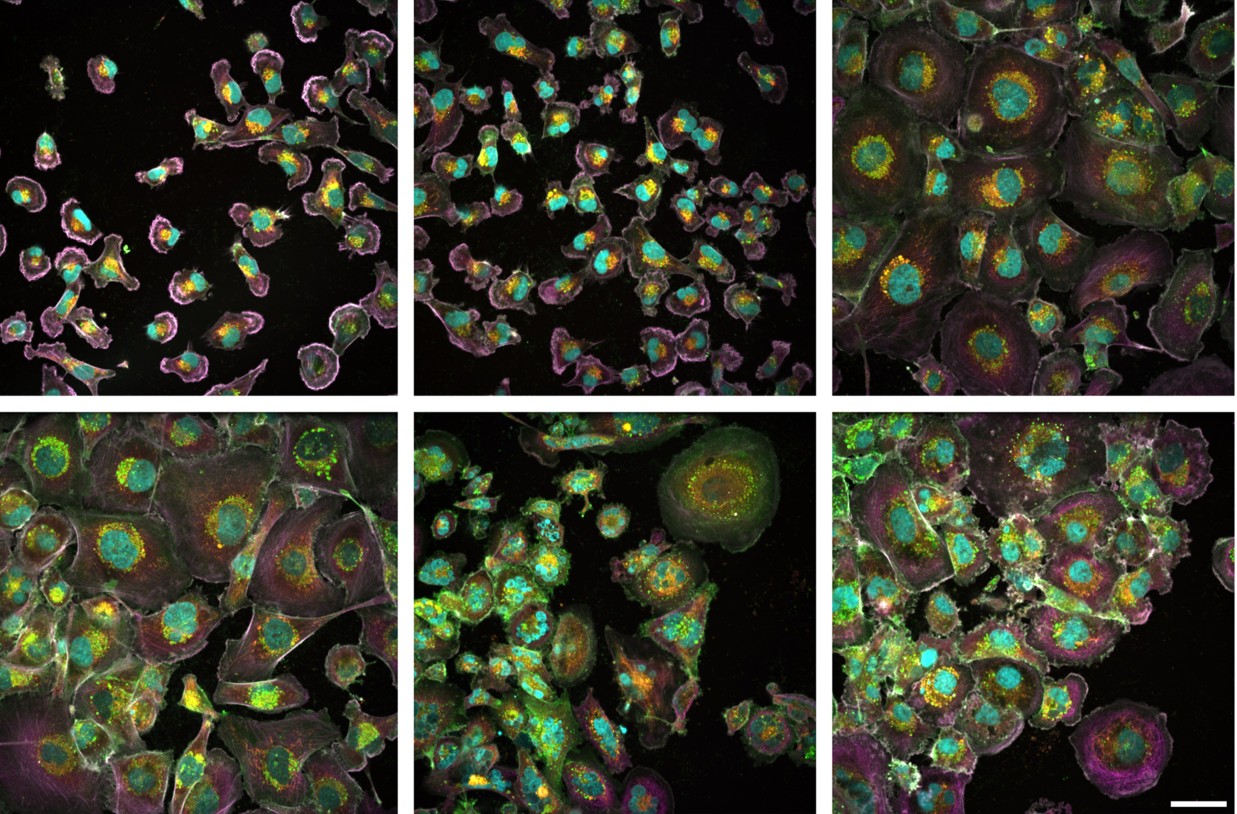
 MDA-MB-231 breast cancer cells. / CNIO Confocal Microscopy Unit.
At the Spanish National Cancer Research Centre (CNIO), researchers aim to tailor breast cancer treatment and prevention to each individual.
Research has led to substantial improvements in breast cancer survival in developed countries. Yet breast cancer encompasses many different diseases, and some subtypes remain a major clinical challenge. Further progress calls for an individualised approach. Highly individualised: which genes and lifestyle factors, such as diet, exercise and emotional well-being, influence each person’s cancer and response to treatment? This is one of the questions being addressed by CNIO’s Breast Cancer Clinical Research Unit, led by Miguel Ángel Quintela.
In prevention, the MamoRisk project, led at CNIO by Anna González-Neira, is already under way. It aims to estimate each woman’s individual risk of developing breast cancer so that preventive measures can be matched to that risk. Here is how CNIO researchers are working towards a more personalised approach to breast cancer:
Understanding how each tumour evolves, with the help of AI
Why do people with similar tumours sometimes have very different outcomes? Researchers at CNIO’s Breast Cancer Clinical Research Unit, led by Miguel Ángel Quintela, are investigating this question. Their High Definition Oncology project follows women with advanced cancer, including breast cancer.

The project combines information about each tumour with data on patients’ physiology and everyday lives. It brings together biological samples, clinical assessments and smartwatch data on physical activity, sleep and heart rate. Patients also report their symptoms and well-being.
The team is investigating whether AI-assisted analysis of changes in a patient’s condition could flag potential problems and help determine when a medical assessment might be needed.
Researchers also aim to link patient monitoring to liquid biopsy, a technique that makes it possible to analyse fragments of tumour-derived DNA circulating in the blood. They are exploring whether changes recorded in daily life could precede molecular changes and help identify when a liquid biopsy would be most informative.
Lifestyle and tumour biology
Alongside patient monitoring, the group is studying changes in tumour biology. The researchers have developed a breast tissue-specific epigenetic clock based on age-related patterns of DNA methylation. When they applied it to tumour samples, the estimated epigenetic ages were lower than the patients’ chronological ages.
This apparent “rejuvenation” does not mean that the tissue is healthier. The team is now investigating whether these differences could provide additional information about the course of the disease.
Personalised nutrition during treatment
The focus on each patient’s physiology also extends to metabolism and the gut microbiota. This approach is reflected in LUMINOVA, a clinical trial at Hospital Universitario 12 de Octubre that is assessing whether personalised nutritional support can improve quality of life in women with advanced breast cancer or gynaecological tumours while they receive antibody–drug conjugates (ADCs). The trial compares a personalised nutritional intervention with Mediterranean-diet recommendations.
How tumours interact with the body
Each patient’s immune system also influences the course of their cancer. A recent study identified a role for the protein osteopontin in resistance to antiangiogenic therapies, which target tumour blood vessels, when these treatments increase oxygen deprivation (hypoxia) within the tumour.
In animal models of breast cancer, blocking osteopontin restored anti-tumour immune responses and improved the activity of antiangiogenic treatment combined with immunotherapy. These findings are now guiding research into strategies to overcome treatment resistance, although their safety and efficacy in patients have yet to be demonstrated.
Towards a new therapy for triple-negative breast cancer
Triple-negative breast cancer is particularly prone to spreading through the body and remains a major clinical challenge. Researchers are exploring more treatments targeted to the individual characteristics of each patient’s cancer.
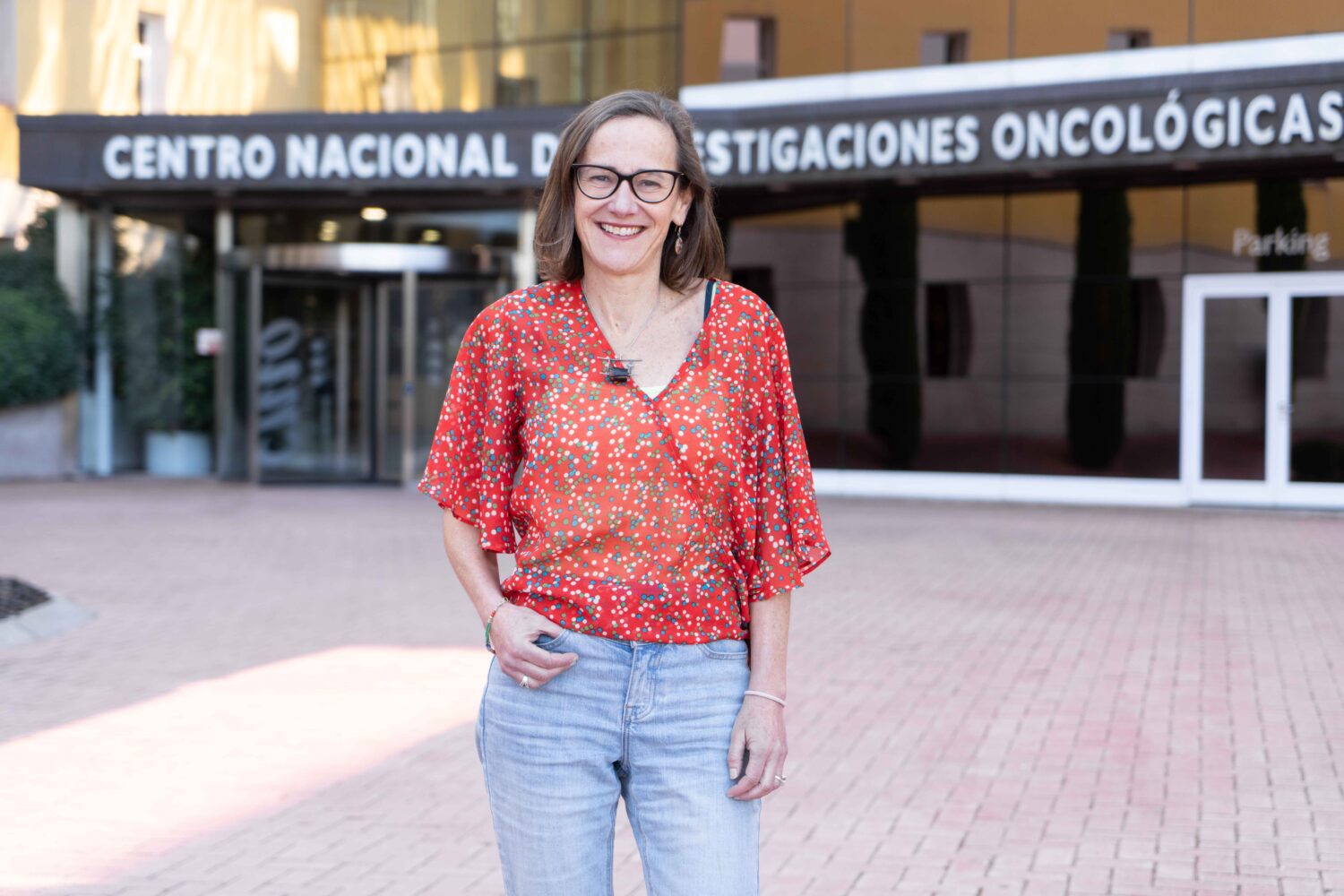
Eva González Suárez, head of CNIO’s Transformation and Metastasis Group, is advancing the development of a new therapy for triple-negative breast cancers that express a protein called RANKL, which account for approximately 30% of cases of this subtype.
Her team is developing a proof-of-concept treatment based on new RANKL inhibitors, with funding from the European Research Council (ERC).
MamoRisk: greater risk, more prevention
Mammograms currently offered by Spain’s National Health System on the basis of age and family history remain the best way to detect breast cancer early. However, a statistical model is now available that predicts each woman’s risk using information about her lifestyle, genetics and mammographic characteristics. The MamoRisk project will validate this model. Once its effectiveness has been demonstrated, it could be introduced into population-based breast cancer screening programmes.

At CNIO, high-throughput DNA sequencing has already begun on 1,600 samples received for the project.
MamoRisk provides the equivalent of a “risk calculator”: each woman’s risk factors are entered to classify her risk of developing breast cancer as low, intermediate or high over two- and five-year periods. The project is jointly led by CNIO, the Santiago de Compostela Health Research Institute (IDIS) and the Galicia Sur Health Research Institute (IISGS).