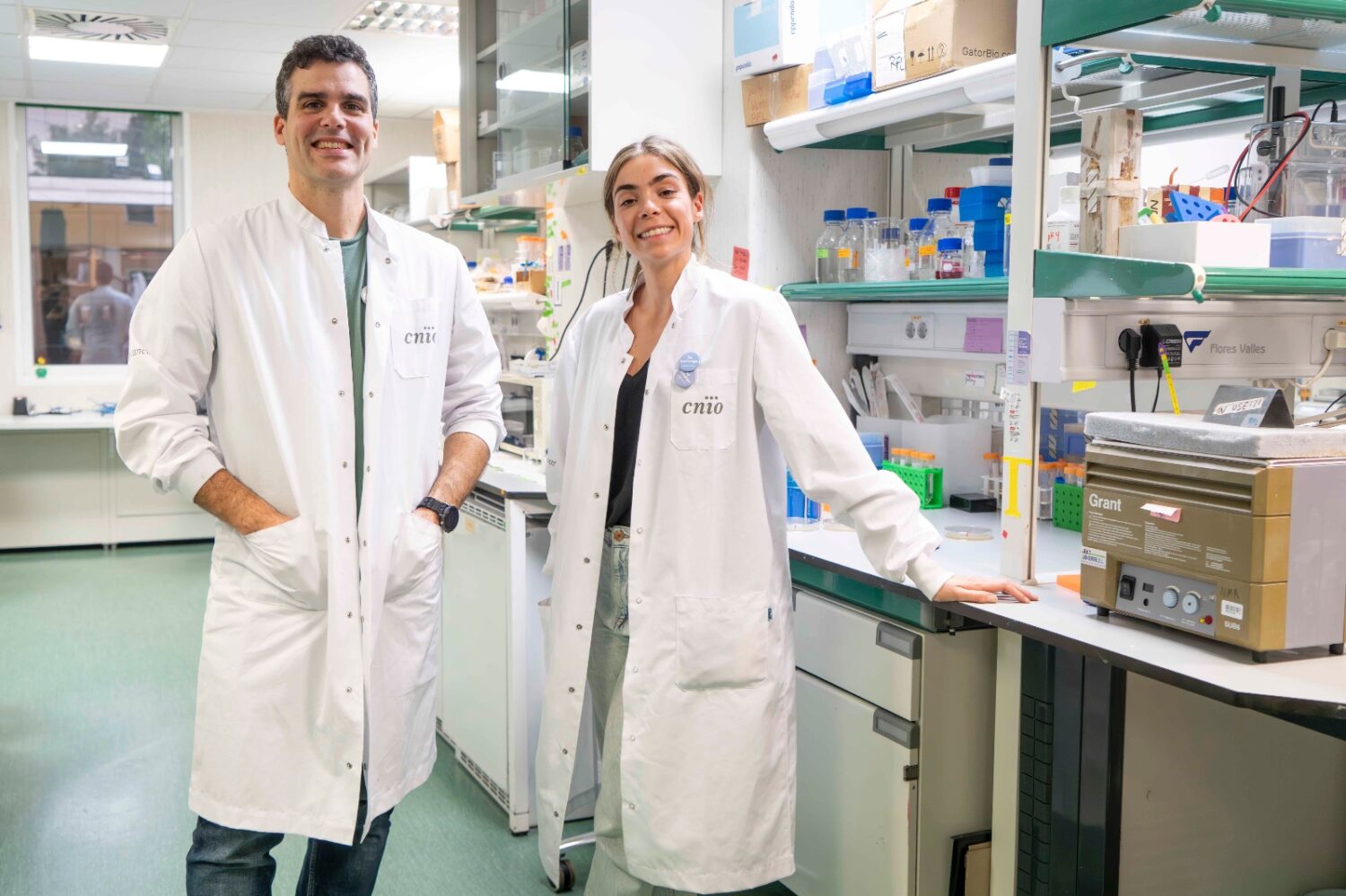
 Rafael Fernández-Leiro and Elena Gutiérrez (left to right) in the CNIO laboratory where they design custom proteins to explore new ways of detecting melanoma early.
Elena Gutiérrez and Rafael Fernández-Leiro are designing proteins that recognise molecules carried in vesicles released by tumour cells. They are investigating whether these molecules could help detect melanoma.
The approach uses artificial intelligence tools and builds on advances recognised by the 2024 Nobel Prize in Chemistry.
After establishing how to design and evaluate the proteins in the first year, the team plans to test them in human samples in collaboration with Héctor Peinado’s group.
La Roche-Posay funds Elena Gutiérrez’s position. She joined CNIO in 2025 through the Friends of CNIO Research Contracts Programme. The brand has worked with the centre since 2019.
At the Spanish National Cancer Research Centre (CNIO), Elena Gutiérrez designs proteins that act as bait. She tailors them to catch molecules associated with melanoma, the most aggressive form of skin cancer. These molecules can travel through the bloodstream in small vesicles released by tumour cells. The team is investigating whether they could serve as markers of early-stage melanoma.
Gutiérrez joined CNIO’s Genome Integrity and Structural Biology Group, led by Rafael Fernández-Leiro, in 2025. In the first year, the team established a process for designing and evaluating these proteins. The project also explores whether the proteins could disrupt communication between cancer cells and their surroundings, known as the tumour microenvironment.
What vesicles carry
Tumour cells release vesicles, small structures that carry molecules and can influence the behaviour of other cells. Some vesicles travel through the bloodstream and help prepare tissues elsewhere in the body for the arrival of cancer cells. Héctor Peinado, who worked at CNIO until 2025 and is now at the National Centre for Biotechnology (CNB-CSIC), studies what these vesicles carry to identify molecules specific to melanoma.
“One day we had coffee together,” recalls Fernández-Leiro. That conversation with Peinado led to the idea of designing proteins with the right shape to bind to those melanoma-associated molecules.
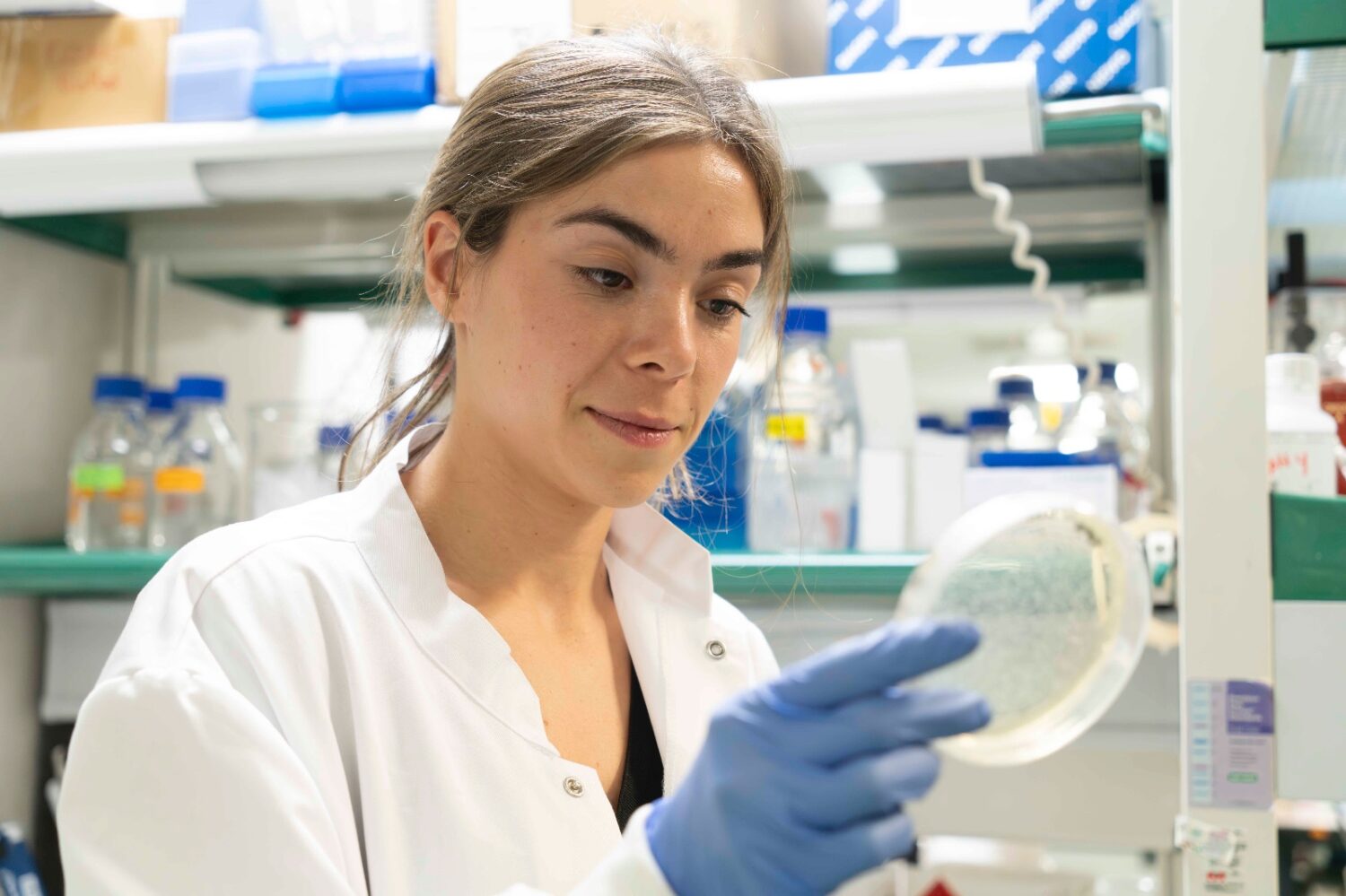
Proteins designed to recognise a target molecule
A protein is a chain of amino acids that folds into a three-dimensional shape. That shape helps determine which molecules it can fit with, like a key in a lock.
The 2024 Nobel Prize in Chemistry recognised two advances that made this approach possible. Demis Hassabis and John Jumper developed AlphaFold2, an artificial intelligence system that predicts a protein’s shape from its amino acid sequence. David Baker was recognised for designing new proteins.
“We can now design and produce proteins that do not exist in nature,” explains Gutiérrez. These proteins, known as binders, are designed to recognise and bind to a specific molecule.
Artificial intelligence generates thousands of designs. The team selects the most promising ones and produces them in the lab. The researchers then check which proteins bind to the intended target and whether they also recognise other molecules, which could make the results harder to interpret.
“This is where we spend most of our time,” says Gutiérrez. The team uses vesicles obtained from cell cultures in some of the tests. The results help the researchers decide which proteins to take forward.
The next step
In the second year of the project, the team plans to test the designed proteins in human samples in collaboration with Peinado’s group at CNB-CSIC. The potential diagnostic use of the method remains to be assessed. In blood, the challenge would be to recognise a molecule present in very small quantities among thousands of proteins and vesicles from different tissues.
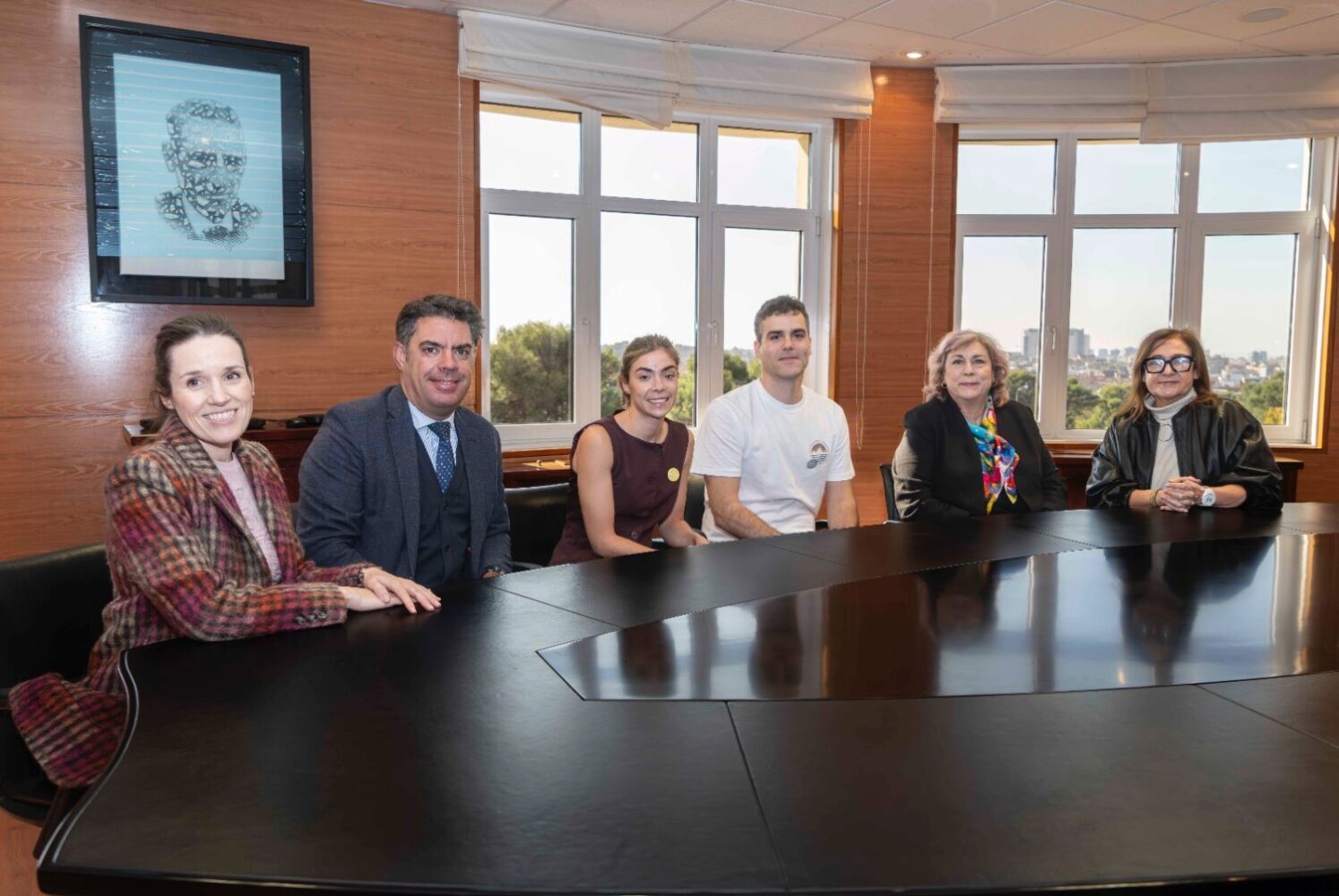
A partnership that supports researchers
Elena’s position continues a partnership that La Roche-Posay, a L’Oréal Dermatological Beauty brand, has maintained with the Friends of CNIO philanthropic initiative since 2019. The brand has also supported Isabel Espejo’s position. Espejo joined the Telomeres and Telomerase Group, led by Maria Blasco, in 2023.
CNIO and L’Oréal also collaborate on photoprotection research. Using cell cultures and reconstructed skin, they are studying how to protect DNA and telomeres in the skin from ultraviolet radiation damage.
“For L’Oréal Dermatological Beauty, and for Laboratoires La Roche-Posay in particular, contributing to skin cancer research is an expression of our commitment to skin health,” L’Oréal Dermatological Beauty said in a statement.
Fernández-Leiro’s group is working with an initial target molecule associated with melanoma. The aim is to use the method to design new binders to study other molecules involved in cancer.