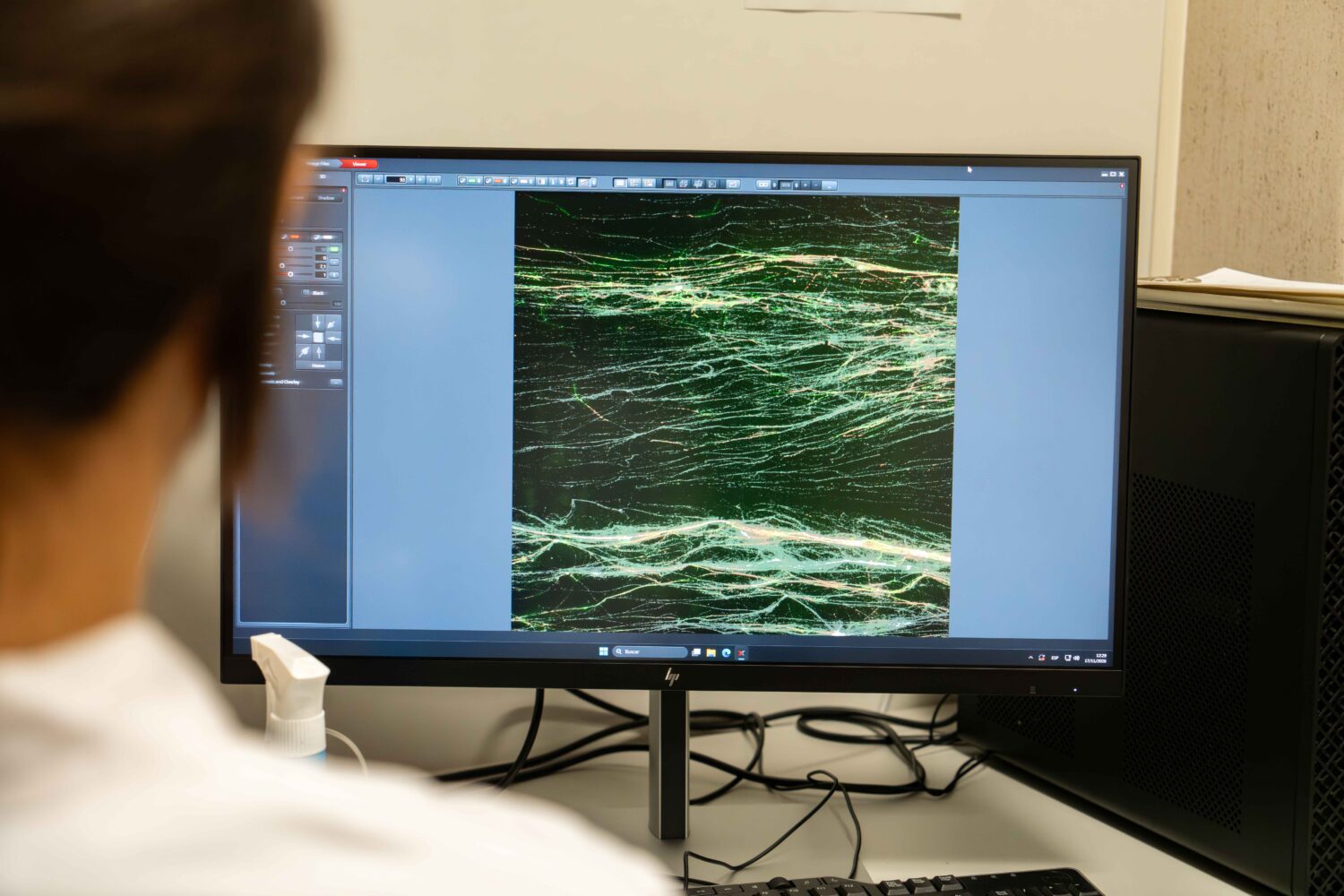
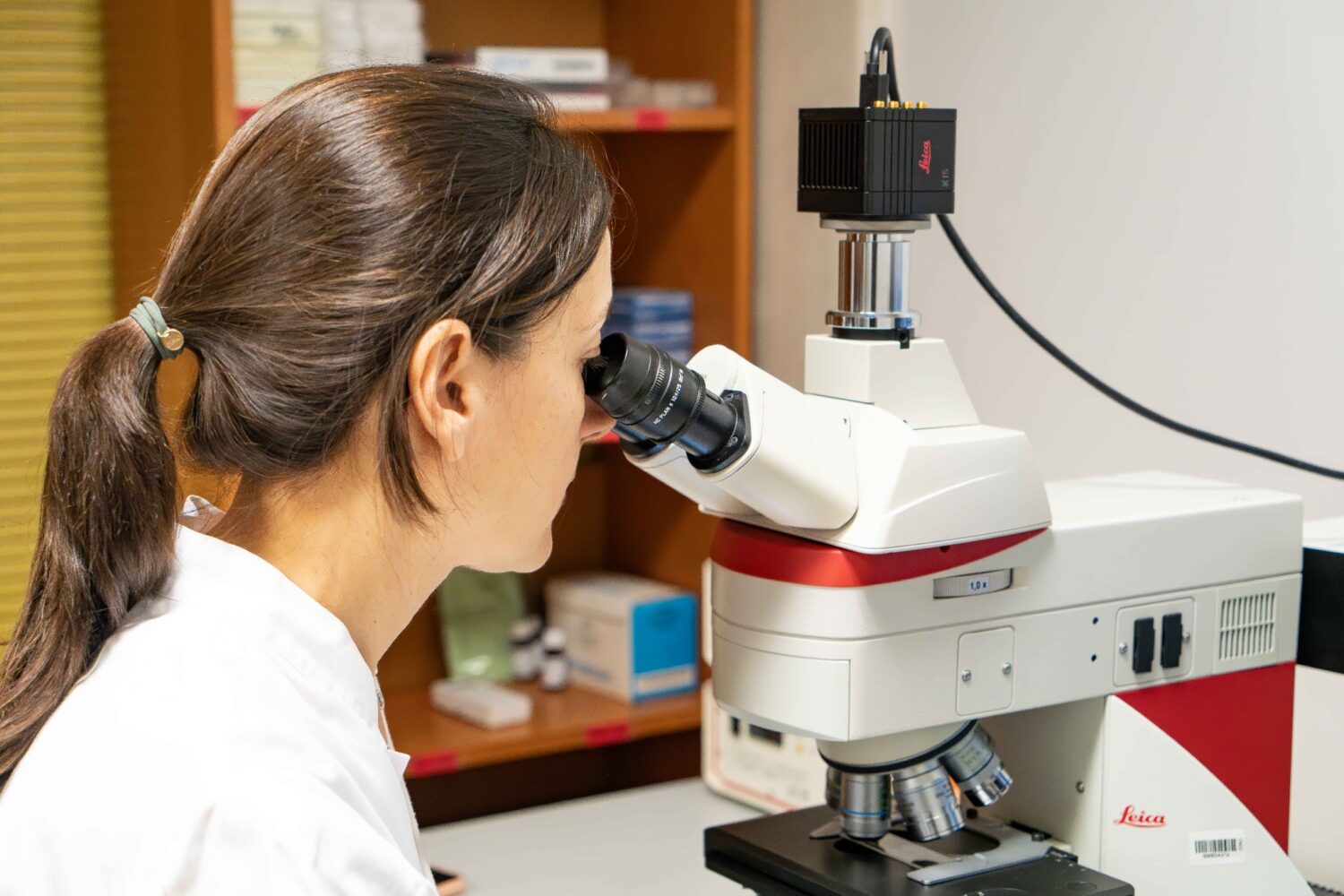
 A CNIO researcher looking at images of DNA molecules observed under a microscope. / MadMoviex.CNIO
Researchers at the Spanish National Cancer Research Centre (CNIO) and Stanford University (USA) uncover a previously unknown aspect of cell division, a fundamental biological process that still holds many secrets.
The findings provide clues as to how to block PRIMPOL, a protein that helps cancer cells withstand treatment.
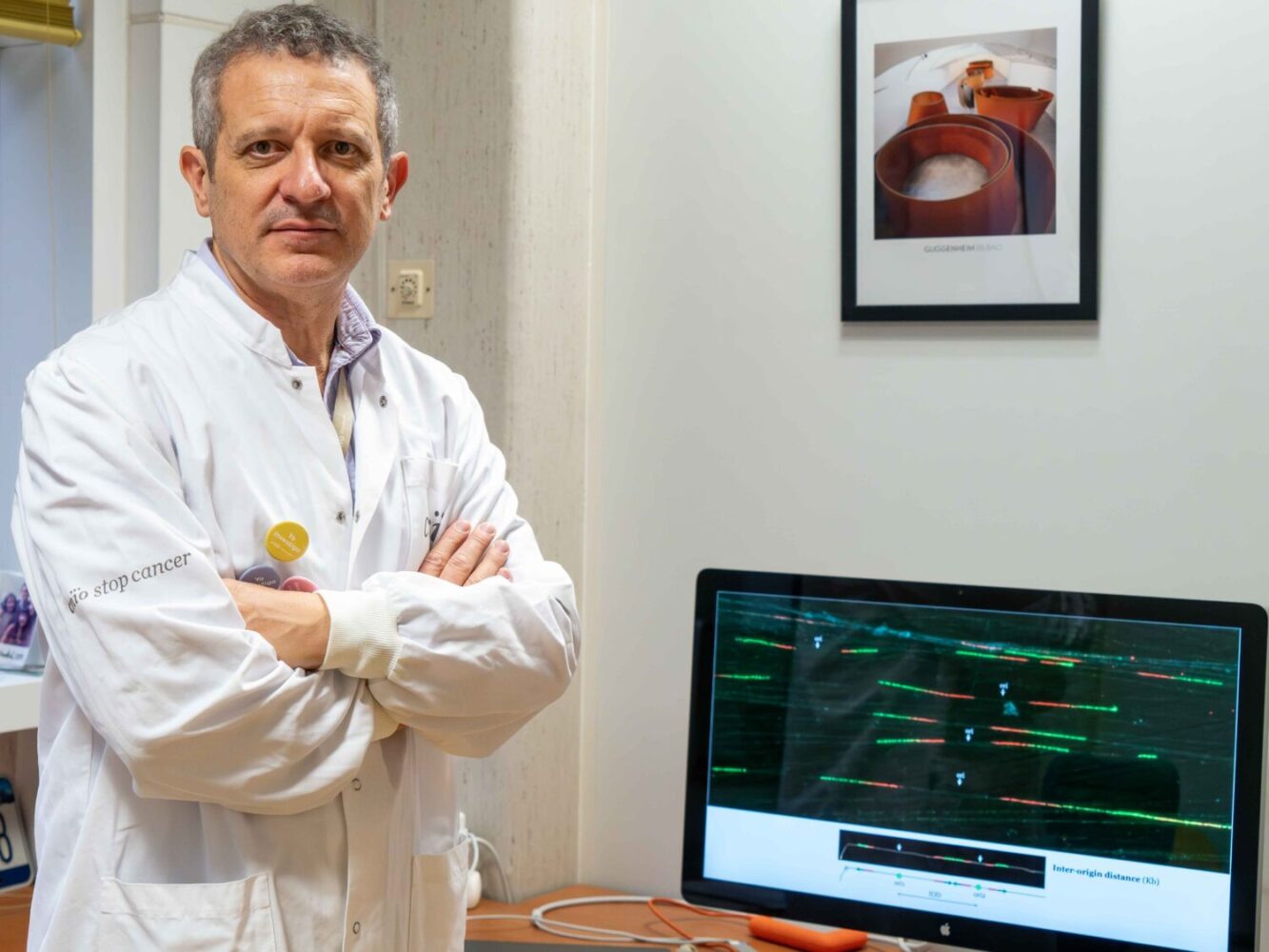
The discovery was made possible by a new technique that allows individual DNA molecules to be visualised in real time as they are being copied.
Cancer begins in DNA, which is why everything about this well-known molecule is extensively studied at the Spanish National Cancer Research Centre (CNIO). For instance, what exactly happens when DNA is duplicated? Every time a cell divides into two daughter cells, its DNA is copied. Researchers at CNIO and Stanford University (USA) have now uncovered a new aspect of this complex process, which has been studied for decades but still holds many surprises.
The new findings, published in the journal Nature, could open up avenues for future cancer treatments.
The discovery concerns how cells deal with obstacles that arise during DNA replication. If a break or lesion occurs in the DNA being copied, does replication stop, or can it continue because the cell tolerates the damage? Chemotherapy and radiotherapy aim to eliminate cancer by inducing this kind of damage in tumour cells, which is why understanding its effects is so important. If cancer cells learn to tolerate DNA lesions and continue replicating, treatment will fail.
Blocking the protein that enables damaged DNA to be replicated
The research groups led by Juan Méndez at CNIO and Gheorghe Chistol at Stanford University School of Medicine (USA) are studying a protein called PRIMPOL, which enables DNA replication to proceed even when damage is present. In tumour cells, however, this is precisely what researchers want to prevent.
DNA damage in tumour cells may have been induced by the treatment itself, meaning that PRIMPOL could be helping cancer cells to continue replicating and survive. Researchers have been investigating for years how to prevent this by blocking PRIMPOL.
The CNIO and Stanford teams have now discovered that PRIMPOL relies on another protein, called CMG, to perform its function. Targeting CMG could offer a way to block PRIMPOL.
“Tumours are being identified, including some subtypes of acute myeloid leukaemia (AML), that become resistant to treatment because of high PRIMPOL activity,” explains Méndez, head of the DNA Replication Group at CNIO.
“In these cases, inhibiting its function could improve the effectiveness of treatments. In my laboratory, we have been trying to identify inhibitors for several years, and it has proved challenging. This discovery opens up the possibility of inhibiting PRIMPOL through its interaction with CMG.”
Watching DNA replicate in real time
The team used advanced microscopy techniques to visualise DNA replication in real time. It is rather like spying on a process that takes place trillions of times a day in the human body: complex molecular machinery, just nanometres in size and made up of dozens of proteins, spends hours copying DNA inside the nucleus of our cells.
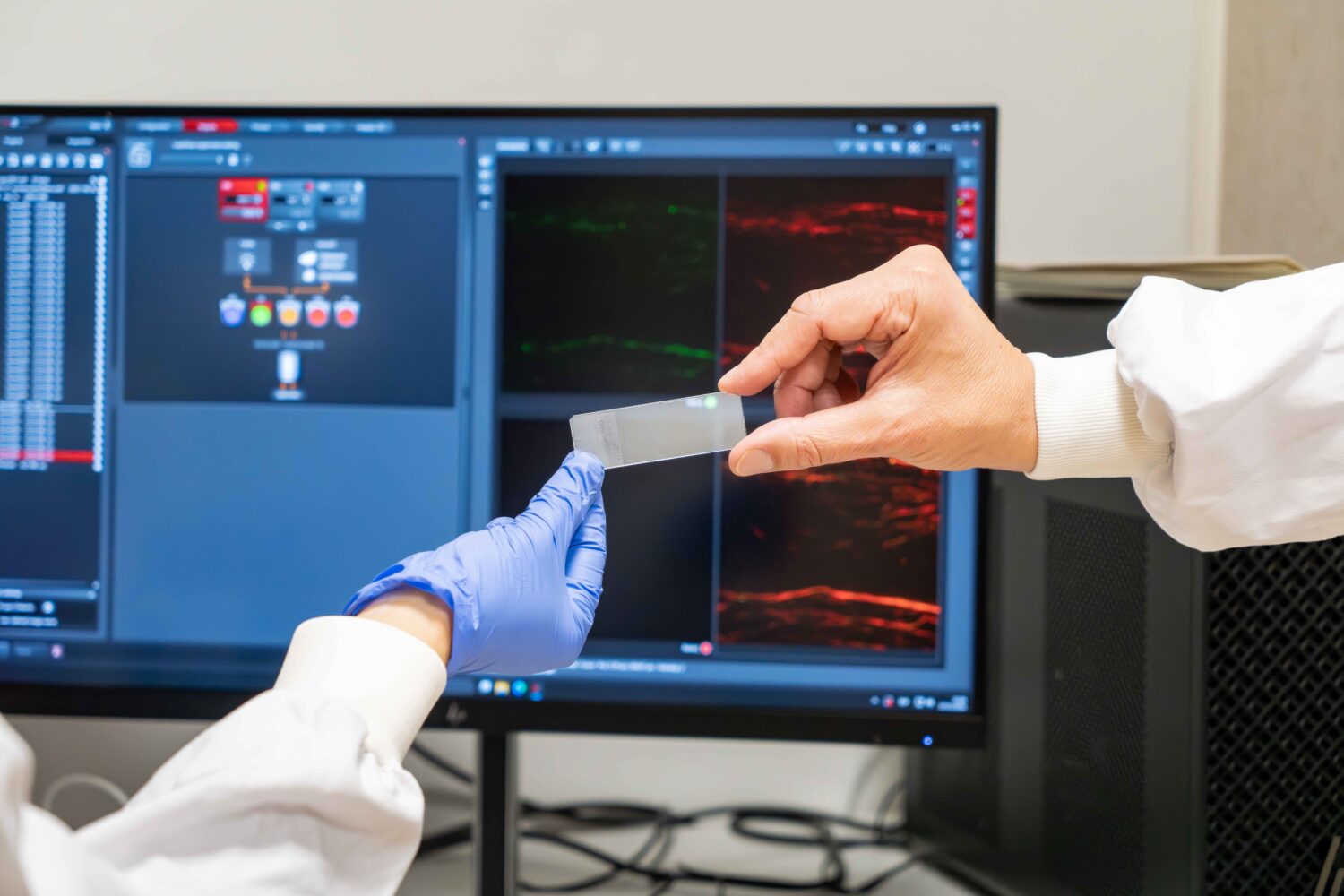
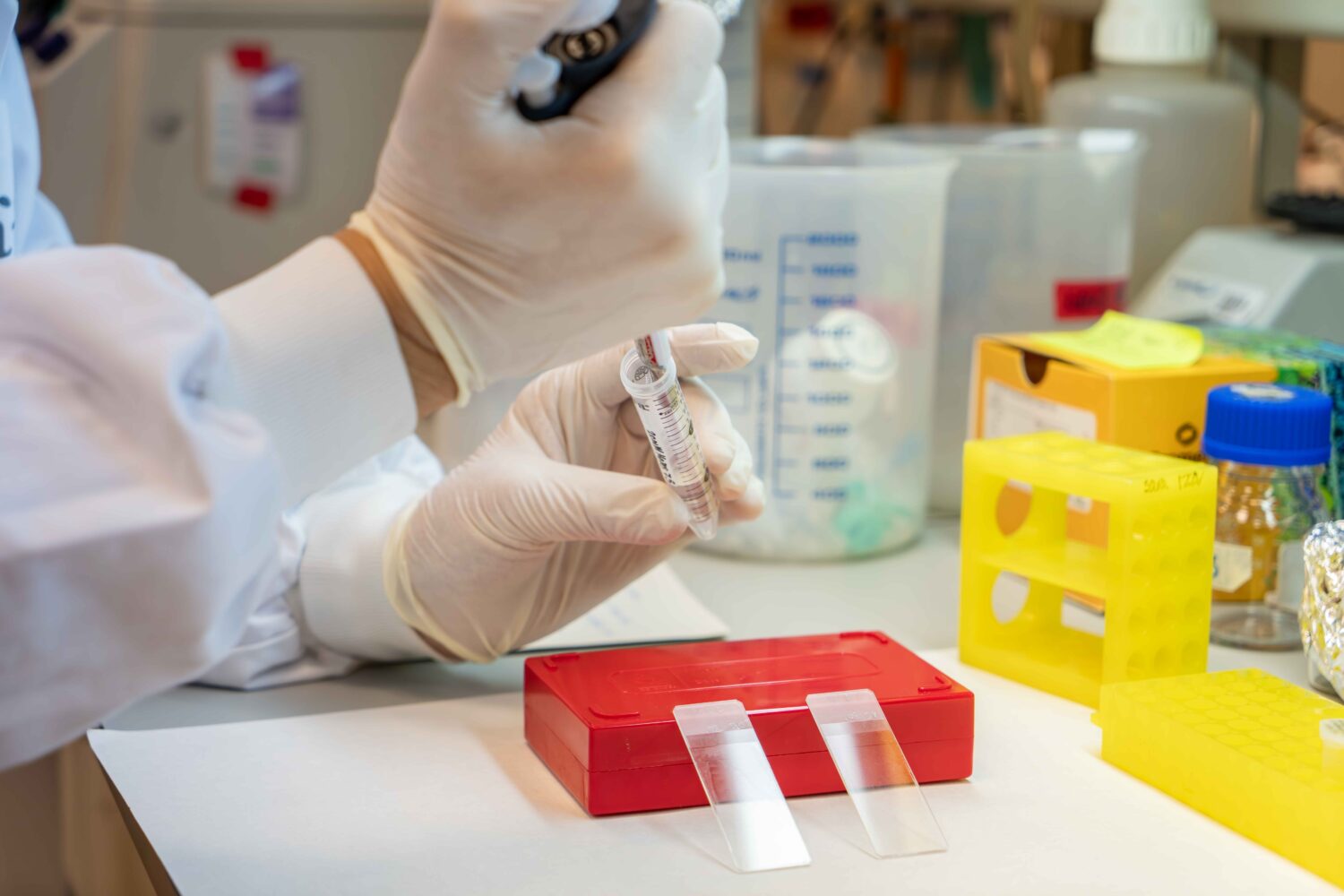
The researchers attached individual DNA molecules to a glass surface and added specific proteins that initiate replication and generate a fluorescent signal as the process unfolds. Using specialised microscopes, they can observe when DNA replication stops or resumes and measure the rate at which it occurs.
“In this study, we discovered how the PRIMPOL protein selects the sites where it needs to act and how it positions itself at the molecular level to perform its function correctly,” explains Méndez.
“It does so through a physical interaction with another protein involved in DNA replication, the CMG helicase. This interaction between PRIMPOL and CMG not only determines where PRIMPOL needs to act, but also enables coordination with the DNA polymerases that can then resume replication quickly and efficiently.”
His group at CNIO is already using artificial intelligence models to try to develop compounds that target CMG and PRIMPOL.
The study also involved Elena Blanco-Romero and Roberto Masdemont-Maestro from CNIO, and Jinho Park and Luke Lynch from Stanford University.
Reference article
Park, J., Lynch, L.D., Blanco-Romero, E. et al. The molecular basis of replication fork restart via repriming by PRIMPOL. Nature (2026). https://doi.org/10.1038/s41586-026-11276-y